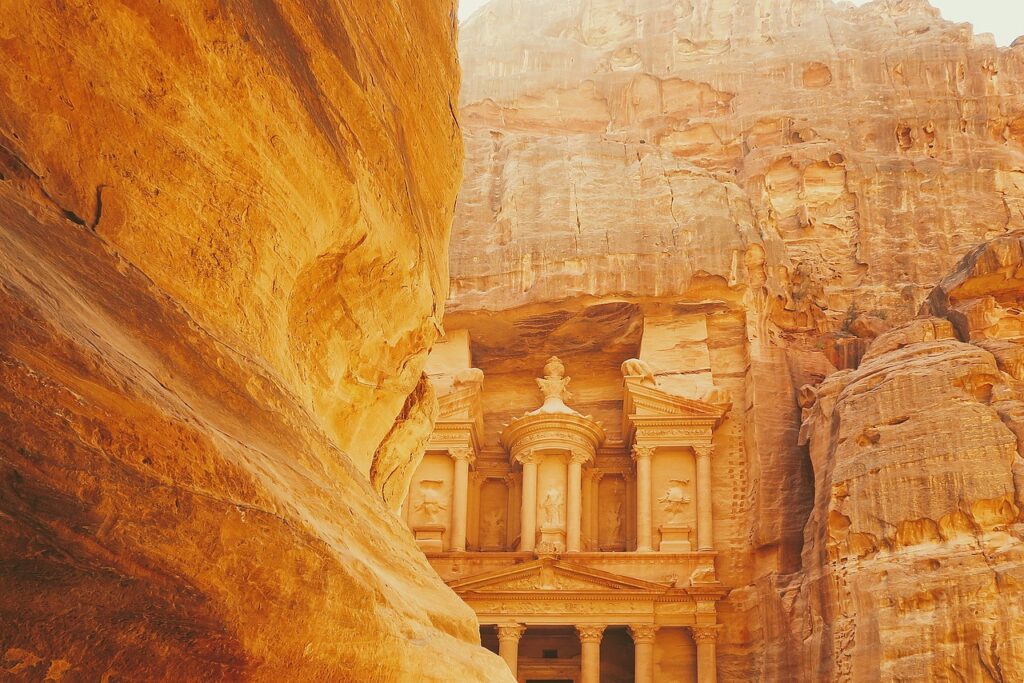
Petra, the ancient Nabataean city carved into rose-red cliffs in southern Jordan, is one of the world’s most mesmerizing archaeological wonders. Often referred to as the “Lost City,” it captures the imagination with its intricate rock-cut architecture, desert landscape, and layers of history that span millennia. Visiting Petra is more than just ticking off a UNESCO World Heritage Site—it’s an unforgettable journey through time, where history and natural beauty collide in a dramatic setting. This complete guide will help you make the most of your visit, whether you’re there for a day or longer.
Entering the Siq and Unveiling the Treasury
The adventure into Petra begins at the Siq, a narrow gorge that stretches over a kilometer and is flanked by towering sandstone cliffs. Walking through the Siq is like being slowly drawn into a different world. The dramatic colors and curves of the rock create a sense of anticipation, culminating in a cinematic reveal of Petra’s most famous monument: the Treasury, or Al-Khazneh. This ornate façade, carved directly into the rock face, is awe-inspiring in scale and detail. Although its true purpose remains debated—possibly a tomb or temple—it sets the tone for the incredible structures to follow.
Exploring the Heart of the Ancient City
Beyond the Treasury lies the heart of Petra, an expansive landscape filled with tombs, temples, and remnants of a complex urban civilization. Walking along the Street of Facades, visitors encounter rows of elaborate Nabataean tombs with intricate carvings and towering columns. The Theater, carved into a rock slope, once hosted up to 8,000 spectators and reflects the blending of Nabataean and Roman influences. Continuing deeper into the site, the Royal Tombs command attention with their monumental scale and prime location, offering sweeping views over the valley below. Petra’s Great Temple and Colonnaded Street reveal the architectural sophistication of the city, and provide a deeper sense of how life once flourished in this desert capital.
Climbing to the Monastery and Other Viewpoints
One of Petra’s most rewarding experiences is the trek to the Monastery, known as Ad-Deir. The trail includes over 800 rock-cut steps, but the effort is well worth it. Larger than the Treasury and perched atop a remote plateau, the Monastery is both serene and monumental. With fewer crowds and panoramic views of the surrounding mountains, this spot invites visitors to linger and take in the spiritual and natural grandeur. Alongside the Monastery, several high places and viewpoints—such as the High Place of Sacrifice and the Al-Khubtha Trail—offer different angles on Petra’s dramatic topography and hidden marvels. Each ascent reveals new facets of the city and underscores its connection to the landscape.
Understanding the Culture and Modern Bedouin Presence
While Petra is steeped in ancient history, it is also alive with modern culture. The local Bedouin communities, particularly the Bdoul tribe, have long called the area home and continue to contribute to Petra’s character. Visitors will encounter Bedouin guides offering stories and hospitality, as well as handmade crafts and tea stalls scattered throughout the site. Engaging with these communities adds a contemporary dimension to your visit, and reminds travelers that Petra is not merely a relic of the past, but a place still lived in and loved by its people. Respectful interaction and curiosity are key to appreciating this unique cultural layer.
Tips for a Meaningful and Comfortable Visit
To make the most of a trip to Petra, preparation is important. Arriving early allows you to experience the site in cooler, quieter conditions, especially in warmer months. Wearing comfortable walking shoes and sun protection is essential, as the terrain is rugged and shade is minimal. Bringing water and snacks is advisable, although refreshments can be purchased along the way. For those interested in a different perspective, returning for Petra by Night—a candlelit experience of the Siq and Treasury accompanied by traditional music—is a magical way to revisit the site’s atmosphere after dark.
Petra is not simply a destination; it’s an encounter with a lost civilization that continues to reveal its secrets to those willing to wander. Whether you’re captivated by its iconic monuments, intrigued by its hidden trails, or moved by its cultural depth, Petra leaves an indelible impression. With its blend of historical majesty and natural wonder, it is a place that stays with you long after the sandstone dust has settled on your boots.